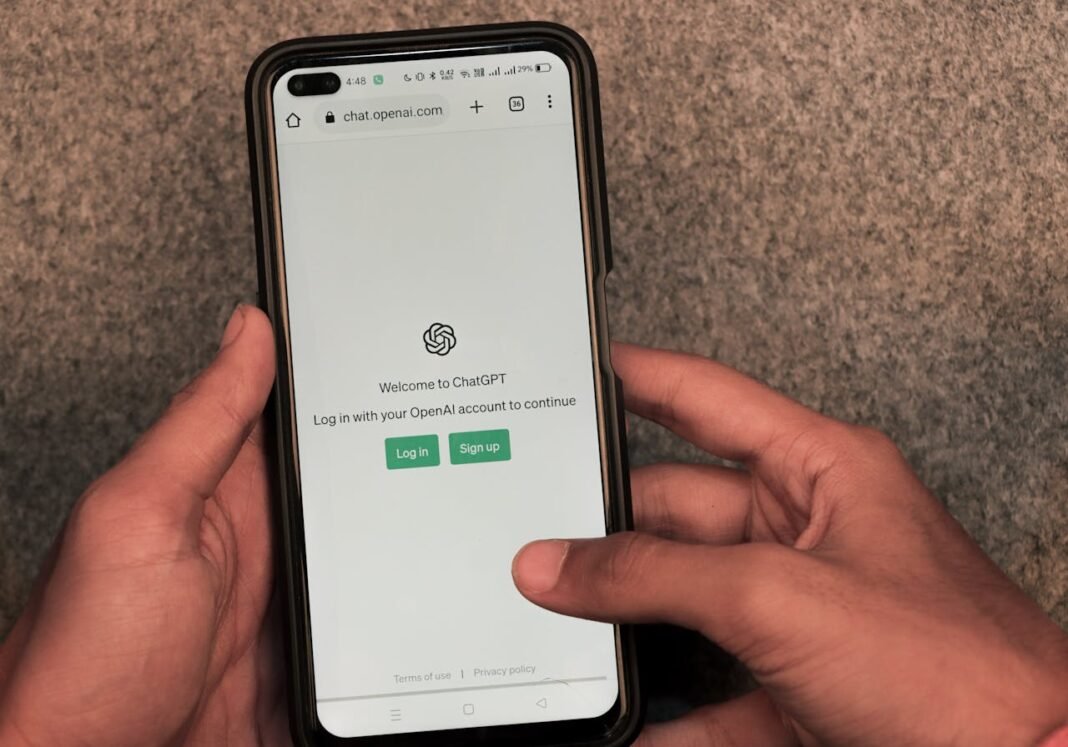

When ChatGPT generates code for your app, the question of ownership arises. Does it belong to you, OpenAI, or someone else? Understanding intellectual property rights and licensing is crucial to avoid legal complications. This introduction explores how AI-generated content challenges traditional ownership concepts and what it means for developers and businesses.
Ownership of Code
Imagine this: you’re developing an app. You’ve designed the UI, built the business logic, and written most of the code yourself. However, you used ChatGPT to generate a few modules and integrated that code into your app.
Richard Santalesa, an attorney and founding member of SmartEdgeLaw Group in Westport, Conn., specializes in technology transactions, data security, and intellectual property. He explains that both contract law and copyright law come into play—and they’re treated differently.
From a contractual perspective, Santalesa highlights that companies providing AI-generated code often treat it like any other intellectual property, claiming it as their own.
Interestingly, OpenAI takes a different stance. Their terms of service state, “OpenAI hereby assigns to you all its right, title, and interest in and to Output.” This means you retain ownership of the code ChatGPT generates for you.
If you’re building an app with AI-generated code, you need to examine ownership claims carefully.
For a global perspective, ZDNET consulted Robert Piasentin, a Vancouver-based partner in the Technology Group at McMillan LLP. He describes AI-generated ownership as an “unsettled area of the law.”
Canada has made efforts to clarify this issue. In 2021, ISED (Innovation, Science, and Economic Development Canada) proposed three approaches:
- Ownership goes to the person who commissioned the work.
- Copyright applies only to human-created works, leaving AI-generated code unprotected.
- A new, “authorless” rights category should cover AI-generated works.
Understanding these frameworks helps developers navigate ownership complexities.

AI and Ownership in the UK: A Legal Perspective
Robert Piasentin, who is also qualified in England and Wales, highlights a unique aspect of UK law. He notes, “The UK is among the first countries to define who can be the author of a computer-generated work.”
Under the UK Copyright Designs and Patents Act, the author of a computer-generated work is the person who made the arrangements necessary to create it. That individual also holds the first ownership of any copyright.
Piasentin points to a precedent from video game litigation to illustrate this. The UK High Court ruled that images created within a game belonged to the developer, not the player. Even though players manipulated the game, they didn’t make the necessary arrangements to create those images.
Ownership of AI-generated code might follow similar logic. Piasentin suggests the author could be the developer of the generative AI. However, this doesn’t entirely exclude the prompt-writer or even the creators of the training data as potential authors.
Ultimately, the lack of definitive case law makes ownership questions unclear. Developers must navigate these uncertainties carefully.
What about Copyright?
Understanding ownership and copyright is crucial when dealing with AI-generated code. Ownership determines who controls the source code, decides on modifications, and manages distribution. Copyright, on the other hand, provides broader legal protection for creators, governing who can use or reproduce their work.
Attorney Richard Santalesa likens copyright to “one arrow in the legal quiver” during litigation. It provides additional claims, such as breach of contract or confidentiality, beyond misappropriation of IP rights. However, the strength of a copyright claim often depends on proving willful infringement—an ambiguous concept for AI-generated content.
To qualify as a copyrightable “work of authorship,” the U.S. Copyright Office requires human creation. The Compendium of the U.S. Copyright Office Practices explicitly states that works produced by nature, animals, or supernatural entities cannot be copyrighted. While it doesn’t definitively address AI-generated works, code written by ChatGPT likely falls outside copyright protection.
Piasentin observes similar principles in Canada. Canadian law implies authorship must involve a living human, as indicated by provisions referencing “the life of the author.” The Supreme Court of Canada, in CCH Canada Ltd. v. Law Society of Upper Canada, emphasized that original works require “an exercise of skill and judgment,” not merely a mechanical process.
These legal nuances highlight the complexities of protecting AI-generated code under copyright, leaving developers to rely more on ownership rights for control.
Complex Challenges for Coders
Sean O’Brien, cybersecurity lecturer at Yale Law School and founder of the Yale Privacy Lab, sheds light on how rulings are shaping AI-related copyright issues. Moving beyond theories, he highlights a recent decision by the U.S. Copyright Office regarding AI-generated content.
“The U.S. Copyright Office ruled this year that a graphic novel using AI-generated images from MidJourney qualified for copyright,” O’Brien explains. “This was because the overall work included significant human contributions, like authored text and layout. However, the isolated AI-generated images themselves were not copyrightable.”
If this logic extends to software, the application as a whole could be copyrighted, while individual AI-generated routines might not. This creates a need for programmers to clearly identify AI-generated code to secure copyright protection for the rest of their work.
This ruling underscores the importance of careful documentation when integrating AI-generated elements into creative or functional projects.
Licensing issues add another layer of complexity to AI-generated code. Sean O’Brien highlights a critical gap: ChatGPT cannot accurately provide copyright details or apply open-source licenses, such as the GNU General Public License (GPL), to the code it generates.
O’Brien warns, “It’s already been proven that ChatGPT can reproduce GPL-licensed code verbatim, leading to potential license infringements.” He also points out that platforms like Microsoft and GitHub, which integrate OpenAI-based systems into widely used code authoring tools, risk further complicating the licensing landscape.
These challenges emphasize the need for developers to carefully review and manage licensing when incorporating AI-generated code into their projects.
What does it all mean?
Navigating the legal landscape of AI-generated code remains uncharted territory. Even attorneys admit there’s not enough precedent to provide clear answers. While they strongly recommend consulting legal counsel, they acknowledge that limited case law leaves much of this area speculative.
Adding to the complexity, code written by AI likely can’t be owned or copyrighted in a way that ensures full legal protection. This creates significant challenges. Without thorough documentation, distinguishing between copyrightable and non-copyrightable code becomes nearly impossible.
To conclude, Sean O’Brien from Yale shares an important perspective. He suggests that tools like ChatGPT may rely heavily on the concept of fair use—a framework that itself is open to interpretation. However, he says:
There have been no conclusive decisions around this affirmation of fair use, and a 2022 class action called it “pure speculation” because no court has yet considered whether usage of AI training sets arising from public data constitutes fair use.
Also Read About
Sriram Krishnan Appointed as Trump’s Senior AI Policy Advisor
Google Introduces Project Mariner: AI Agents Navigating the Web for You
Free download
Get the free AI Business Guides
Three plain-English guides to help your business use AI, plus a free AI policy template and workflow audit worksheet.
Get them free