
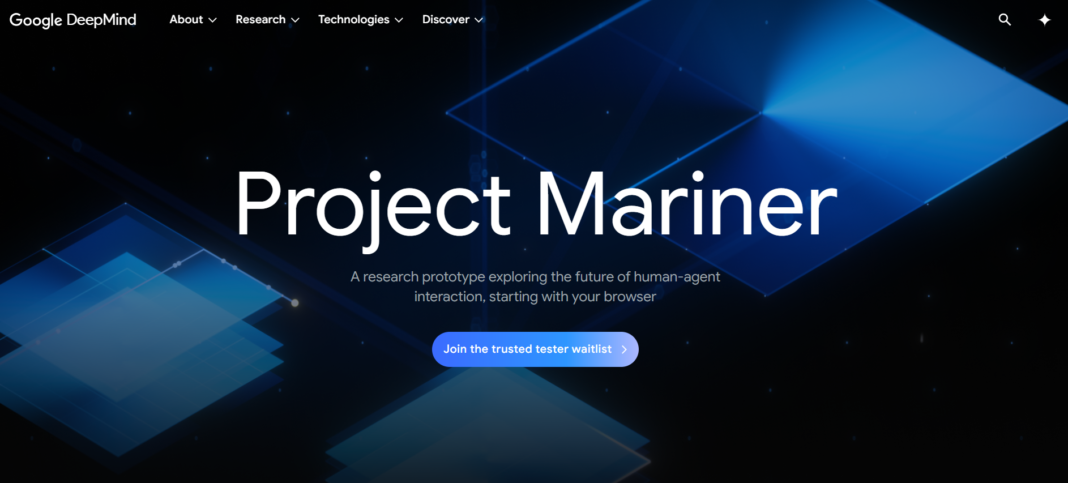

Google introduced its first AI agent capable of performing actions on the web. Developed by DeepMind, this research prototype, known as Project Mariner, uses Gemini technology to control your Chrome browser. It can move your cursor, click buttons, and fill out forms, mimicking human interaction with websites.
Initially, the AI agent is being made available to a small group of preselected testers. This marks a significant step in Google’s exploration of Gemini’s capabilities, which now include reading, summarizing, and interacting with websites.
According to a Google executive speaking with TechCrunch, this development signals a “fundamentally new UX paradigm shift.” Instead of engaging directly with websites, users will interact with a generative AI system that handles these tasks for them.
These changes could impact millions of businesses, including publishers like TechCrunch and retailers like Walmart, which depend on Google to drive real user traffic to their websites.
During a demo with TechCrunch, Google Labs director Jaclyn Konzelmann demonstrated Project Mariner in action.
Once you set up the AI agent with a Chrome extension, a chat window appears on the right side of your browser. You can give commands like, “Create a shopping cart from a grocery store based on this list,” and watch the agent handle the task.
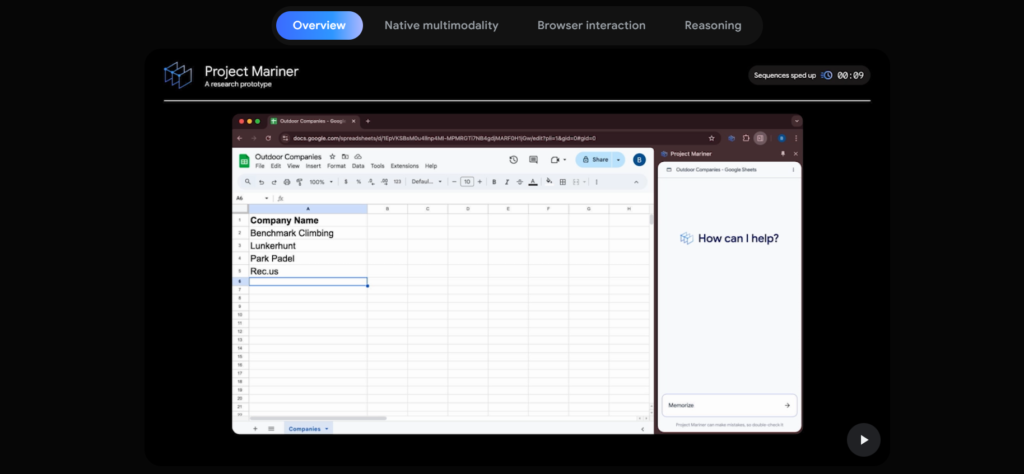
Project Mariner: Google’s AI Agent Redefines Web Interaction
Google’s AI agent, Project Mariner, intentionally avoids tasks like filling out credit card information, accepting cookies, or signing terms of service agreements. These restrictions aim to keep users in control.
Behind the scenes, the agent takes screenshots of your browser window, as outlined in its terms of service. These screenshots are sent to Gemini in the cloud for processing, which then sends back instructions to navigate the web page.
Project Mariner performs tasks like finding flights, shopping for household items, or browsing recipes. However, it only works in Chrome’s active tab. This means you must actively watch Gemini as it clicks through tasks, making multitasking impossible. Google DeepMind CTO Koray Kavukcuoglu explained this design choice ensures users stay aware of the agent’s actions.
“Because [Gemini] is now taking actions on a user’s behalf, it’s important to take this step-by-step,” said Kavukcuoglu. “You can use websites, and now your agent can do everything you do on a website as well.”
For website owners, Project Mariner keeps traffic visible on their pages since it operates on-screen. However, it could lower user engagement and may one day eliminate the need for users to visit websites entirely.
“This is a fundamentally new UX paradigm shift,” said Google Labs Director Jaclyn Konzelmann. “We need to rethink how users interact with the web and how publishers create experiences for both users and agents.”
Alongside Project Mariner, Google also introduced several task-specific AI agents, marking the next step in its AI-driven evolution of web interaction.
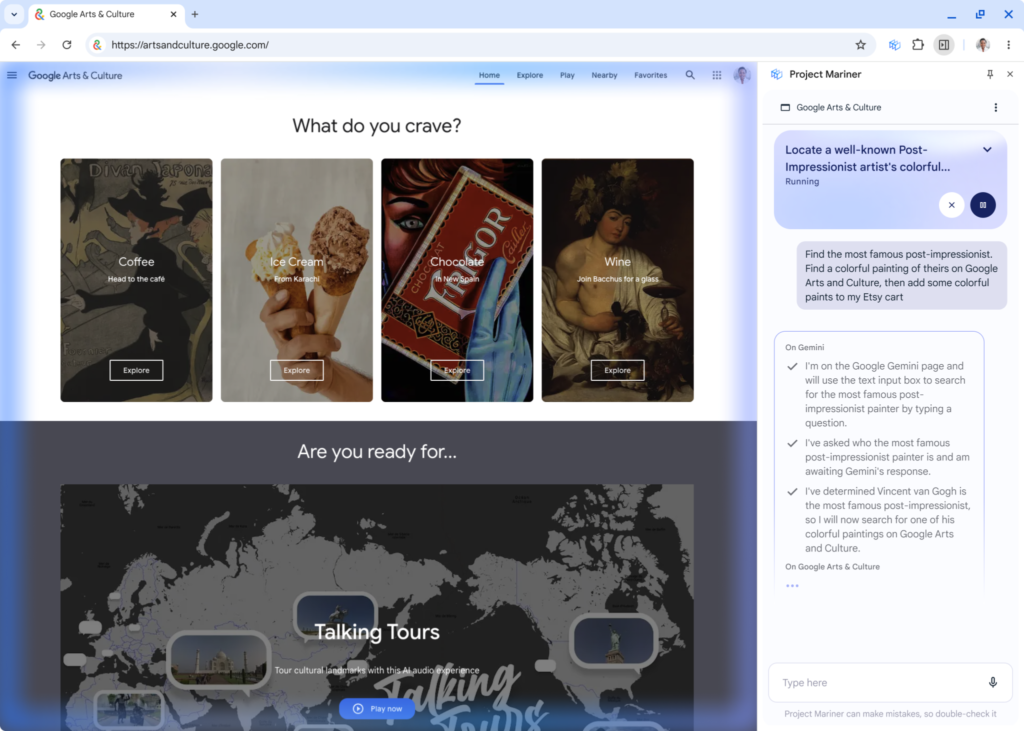
Google Unveils AI Agents to Redefine Research, Coding, and Gaming
Google introduced new AI agents designed to tackle complex tasks and reshape user experiences.
Deep Research helps users explore intricate topics by creating detailed, multistep research plans. Unlike OpenAI’s o1, it doesn’t handle math problems, logical reasoning, coding, or data analysis. Rolling out today in Gemini Advanced, it will join the Gemini app in 2025.
When faced with a challenging question, Deep Research drafts a step-by-step plan for the user’s approval. Once approved, it searches the web, compiles information, and generates an in-depth report within minutes.
Jules, another AI agent, focuses on coding. It integrates seamlessly with GitHub workflows, analyzing codebases and making direct changes. Currently in beta for select users, Jules will launch more broadly in 2025.
Google DeepMind is also developing an AI agent for gaming. Partnering with developers like Supercell, the team tests Gemini’s ability to interpret gaming environments such as Clash of Clans. This work is laying the foundation for AI agents that can navigate both virtual and physical worlds. No release date has been announced for this gaming prototype.
While it’s unclear when Project Mariner or these agents will become widely available, their potential is clear. They signal a major shift in how users interact with the web. Traditionally designed for humans, the web may soon cater to AI agents capable of handling tasks once done manually.
Also Read About
Amazon announces Nova: A New Generation of Multimodal AI Models
Google launches Veo video model on Vertex AI

Free download
Get the free AI Business Guides
Three plain-English guides to help your business use AI, plus a free AI policy template and workflow audit worksheet.
Get them free