Meta Missed the Smartphone Boom. Can Smart Glasses Close the Gap?

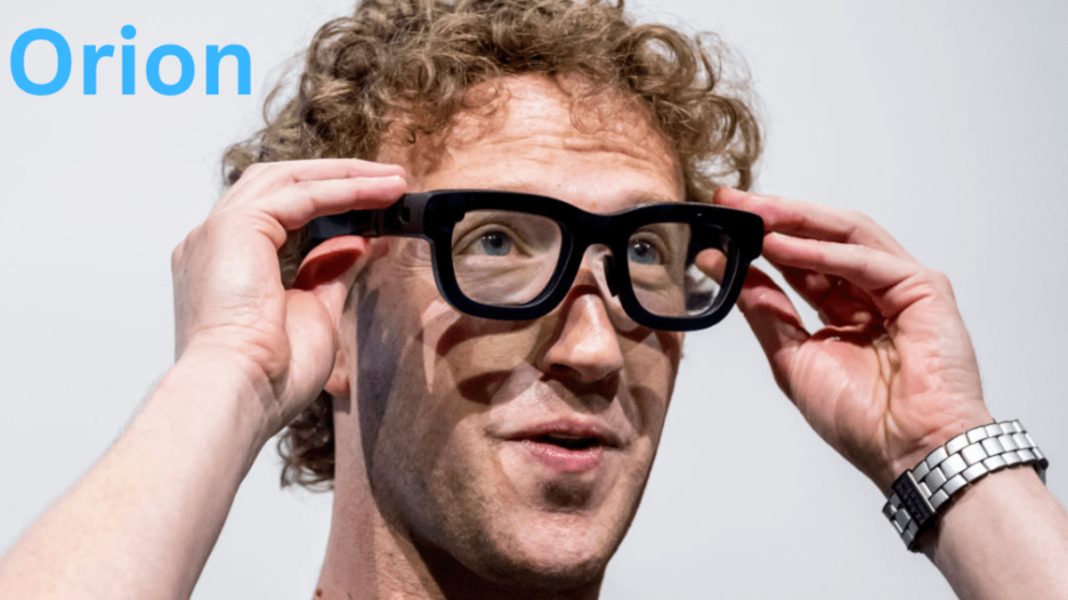
At Meta’s Connect developer conference, CEO Mark Zuckerberg introduced Orion, an innovative pair of smart glasses poised to drive the next evolution in personal computing.

A New Era of Smart Glasses Technology

Meta has led online social connections for 20 years but missed the smartphone wave that powered those interactions. Now, in a bold, multibillion-dollar push, Meta is focusing on wearable computers to stay ahead in connected hardware.

At its annual Connect event in Menlo Park, Meta unveiled the Oculus Quest 3S, a more affordable VR headset, and updated AI-powered Ray-Ban Meta smart glasses. However, the spotlight was on Orion, a prototype of holographic display glasses. According to CEO Mark Zuckerberg, this project has been in development for 10 years.

Zuckerberg highlighted that Orion goes beyond typical smart displays. He claimed that these glasses are so interactive, they could replace smartphones for many daily tasks.

Meta
Source – japantimes.co.jp

Pushing Boundaries with Advanced Technology

Orion glasses are not just another smart display. Meta CTO Andrew Bosworth called them “the most advanced technology humanity has ever produced.” These glasses use a unique neural interface that interprets brain signals via a wrist-worn device. While still a developer-only product, Meta is betting on Orion to redefine how we consume content and interact with the digital world.

The innovative display technology goes beyond traditional flat screens, creating volumetric, 3D images with depth and shape. This makes the visual experience much more engaging than typical augmented reality devices.

Source: CNBC

Meta’s Place in the Competitive AR Market

Meta’s push into smart glasses places it in direct competition with Apple, Samsung, and Snap. Apple recently launched a $3,500 VR headset, while Snap’s developer-only holographic glasses focus on creating mixed-reality experiences. In contrast, Meta aims for mass-market appeal with its more affordable offerings, such as the $300 Meta Quest 3S and Ray-Ban Meta glasses.

Meta’s Orion glasses, however, are still experimental, with no set release date or price. Whether they will fully integrate into everyday life like smartphones remains uncertain. Still, if successful, Orion could be the foundation of a new era of personal computing, possibly making smartphones obsolete.

Zuckerberg’s vision for the future of technology is ambitious, but as he said at the event, “These glasses exist, they are awesome, and they are a glimpse of a future that I think is going to be pretty exciting.”

Also Read About –

Google and Meta Challenge AI Regulations in the UK and EU

Mastercard Leverages AI to Tackle the UK’s Growing APP Fraud Crisis
AI Boom Guide 1 cover: The AI Wake-Up Call AI Boom Guide 2 cover: AI Decoded for Business AI Boom Guide 3 cover: Putting AI to Work

Free download

Get the free AI Business Guides

Three plain-English guides to help your business use AI, plus a free AI policy template and workflow audit worksheet.

Get them free

Hot this week

Big Buildings, Few Jobs: What Does a Data Centre Really Give Your Town?

Data centres promise thousands of jobs. The best studies say the real number is far smaller. So what do towns actually get, and how could the deal be better?

Nej Tack, Chatbots: Sweden Locks ChatGPT and Claude Out of Government PCs

Sweden's Government Offices have blocked ChatGPT and Claude on staff computers and kept Microsoft Copilot. Here is what happened, and what UK businesses should check about AI use in their own teams.

Desk Job: NVIDIA’s Trillion-Parameter AI PC Now Speaks Windows

NVIDIA's DGX Station for Windows promises to run trillion-parameter AI models under a desk, with no cloud needed. Here is what it means for UK businesses, and why the price tag matters.

Unitree H2-X: The Kung Fu Bodyguard Robot That Can Kick a Car (and Lift One)

Unitree's new H2-X "Kung Fu Legend Guardian" humanoid kicks cars, lifts wrecks and claims eight hours of battery. Here is what is real, what is not, and why you cannot buy one.

Rivian Adds a Third Dimension: US Carmaker Buys British World-Building Start-Up

American electric carmaker Rivian has bought British start-up Third Dimension, whose AI turns ordinary video into lifelike 3D worlds, to help train its self-driving cars faster.

Topics

Big Buildings, Few Jobs: What Does a Data Centre Really Give Your Town?

Data centres promise thousands of jobs. The best studies say the real number is far smaller. So what do towns actually get, and how could the deal be better?

Nej Tack, Chatbots: Sweden Locks ChatGPT and Claude Out of Government PCs

Sweden's Government Offices have blocked ChatGPT and Claude on staff computers and kept Microsoft Copilot. Here is what happened, and what UK businesses should check about AI use in their own teams.

Desk Job: NVIDIA’s Trillion-Parameter AI PC Now Speaks Windows

NVIDIA's DGX Station for Windows promises to run trillion-parameter AI models under a desk, with no cloud needed. Here is what it means for UK businesses, and why the price tag matters.

Unitree H2-X: The Kung Fu Bodyguard Robot That Can Kick a Car (and Lift One)

Unitree's new H2-X "Kung Fu Legend Guardian" humanoid kicks cars, lifts wrecks and claims eight hours of battery. Here is what is real, what is not, and why you cannot buy one.

Rivian Adds a Third Dimension: US Carmaker Buys British World-Building Start-Up

American electric carmaker Rivian has bought British start-up Third Dimension, whose AI turns ordinary video into lifelike 3D worlds, to help train its self-driving cars faster.

The UK AI Data Centre With No Plug: Microsoft Walks Away From Nscale’s Loughton Site

Britain's flagship AI computer has 23,000 Nvidia chips lined up and nowhere to plug them in. Microsoft has walked away from the Loughton site as grid power slips into the 2030s.

Meet Duet: The AI Office Manager UK Small Businesses Will Be Queuing For

Anthropic's new Claude Duet is an always-on AI agent that chases invoices, preps your day and works while you sleep. It is not in the UK yet, but here is why small businesses should be watching.

AI Was Meant to Save You Time. Now You’re Its Proofreader.

New surveys suggest workers are spending hours every week fixing AI-generated work. Here is what the numbers really say, and how to stop being your AI's proofreader.

Related Articles

Popular Categories