


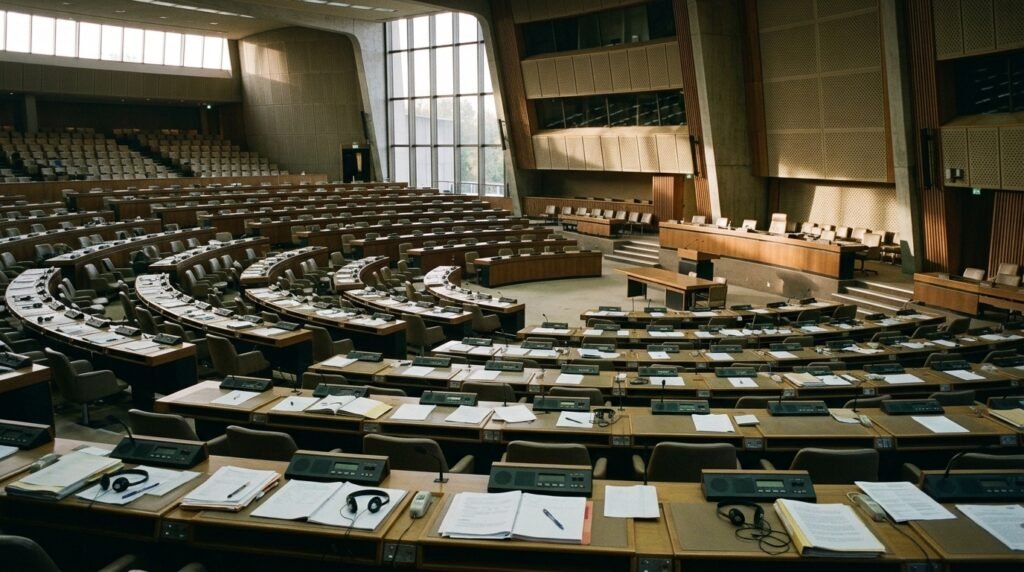
What are AI red lines?
Simply put, they are bans. The idea is that nations agree certain uses of AI are too dangerous under any circumstances. Examples floated by the campaign include:- putting AI in charge of nuclear weapons;
- lethal autonomous weapons;
- mass surveillance and social scoring;
- AI-driven cyberattacks and impersonating people.
Who signed?
The list is heavyweight. It includes AI pioneers Geoffrey Hinton and Yoshua Bengio, economists Joseph Stiglitz and Daron Acemoglu, and former Irish president Mary Robinson. Notably, staff from OpenAI, Google DeepMind, Anthropic and Microsoft signed too, as the Jakarta Post reported.The deadline, and the obstacle
The signatories want red lines in place by the end of 2026. However, the US government soon rejected the idea of a binding global AI watchdog, preferring voluntary rules, according to Fast Company. So a worldwide treaty looks a long way off.Why should a business care?
Global rules eventually trickle down into supplier contracts and customer questions. Meanwhile, the AI labs themselves are now asking MPs for binding rules. Getting your own house in order costs little. Start with our free AI usage policy template. Want to understand how AI is changing business, in plain English? Read Get AI Before It Gets You by the AI Boom team, or get in touch at hello@aiboom.uk. © aiboom.uk
Free download
Get the free AI Business Guides
Three plain-English guides to help your business use AI, plus a free AI policy template and workflow audit worksheet.
Get them free